Chie-no-Mochi
Taste it and you may be blessed with the wisdom of Monju!
When traveling, local specialties are always part of the fun—and Amanohashidate has one you absolutely must try!
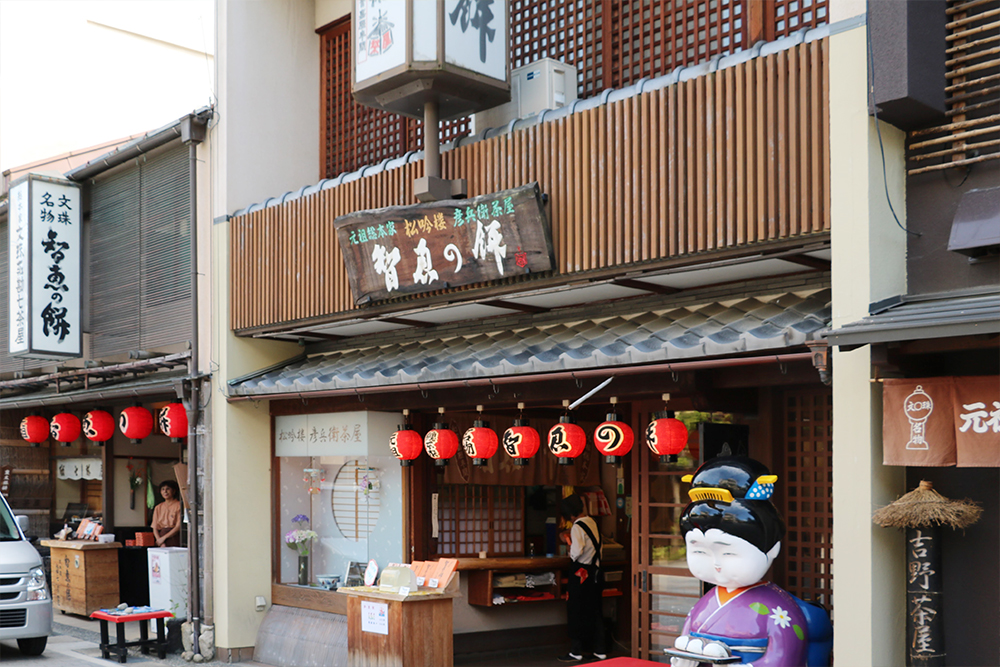
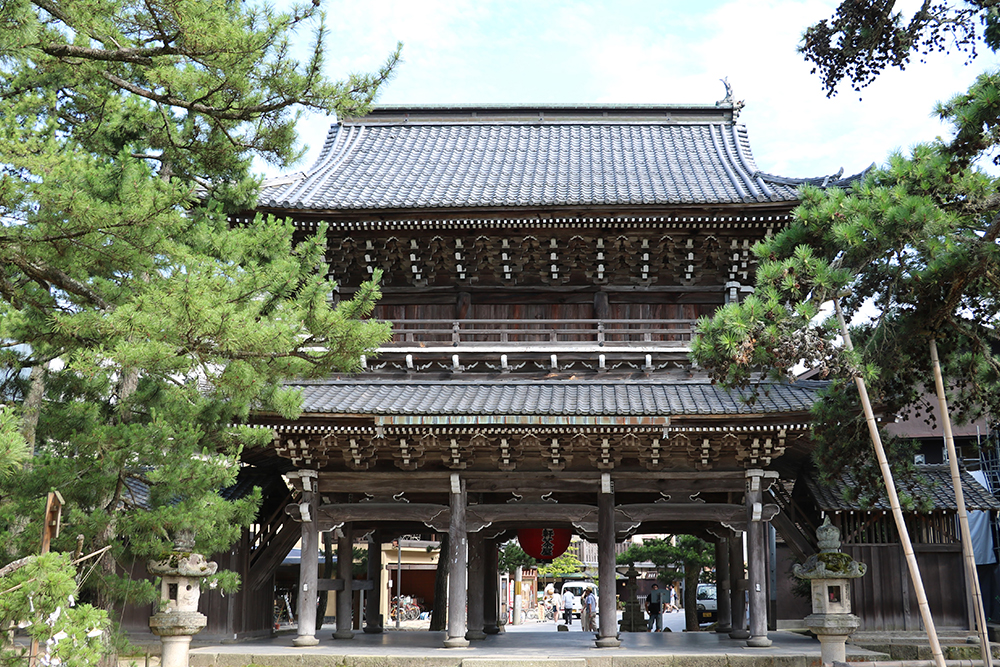
Chie-no-Mochi is a famous sweet served at the four teahouses that line the front of Chion-ji Temple: Yoshino Chaya, Hikohei Chaya, Kanshichi Chaya, and Chitose Chaya.
Named after Monju Bosatsu, the deity of wisdom, it is believed that eating this mochi grants you wisdom—just like the saying, “Three heads together bring the wisdom of Monju.”
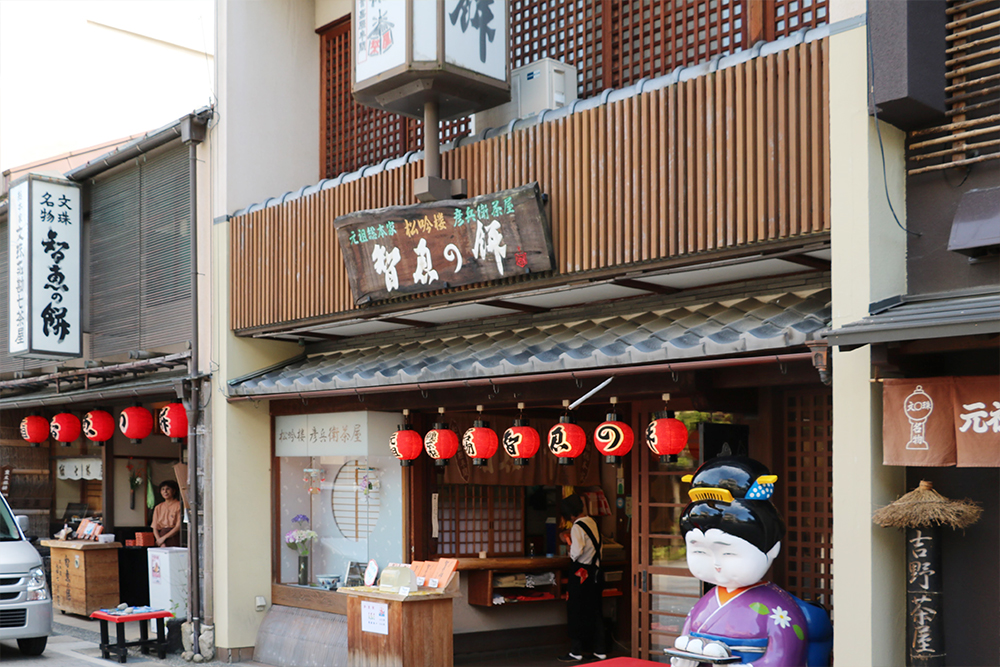
The first teahouse you encounter after leaving Chion-ji’s gate is Yoshino Chaya.
Its Chie-no-Mochi is mildly sweet and elegant in flavor, allowing you to fully enjoy the taste of the mochi—one reason it’s so popular.
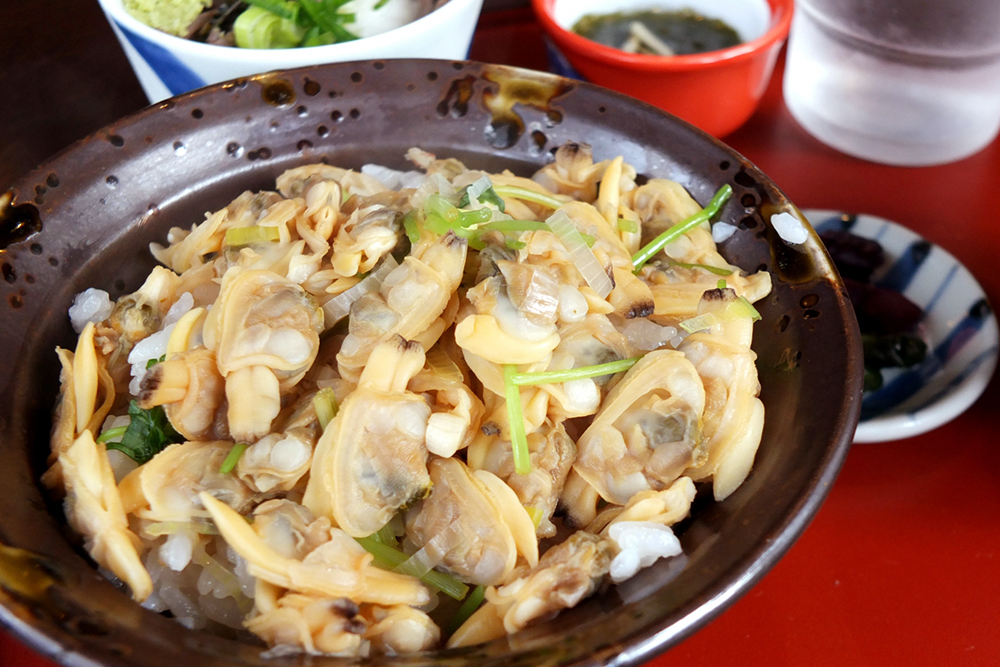
Yoshino Chaya also offers unique menu items such as the hearty Asari Croquette Burger.
If you enjoy variety, their creative spins on Chie-no-Mochi are a must-try.
Next door is Hikohei Chaya, recognizable by the large traditional doll welcoming visitors.
Its Chie-no-Mochi is known for its slightly darker-colored red bean paste and wonderfully soft texture.
In summer, their frozen specialty Chie Gori—matcha shaved ice with two pieces of Chie-no-Mochi hidden inside—is a refreshing treat perfect for cooling down after a day of sightseeing.
The third stop is Kanshichi Chaya.
This teahouse features a traditional irori hearth inside. Enjoying Chie-no-Mochi by the warm glow of the hearth is an experience in itself.
Their mochi has a lighter-colored bean paste that is smooth and pleasantly sweet.
They also offer special varieties such as Jutaro Mochi coated in kinako instead of bean paste, Chie-no-Shizuku chilled sweets, and limited-edition mochi available only during certain seasons.
The final teahouse is Chitose Chaya.
Among the four, it has the darkest bean paste and preserves a traditional flavor, allowing the natural richness of azuki beans to shine.
They use 100% locally grown glutinous rice.
You can also enjoy delicious handmade soba noodles made by skilled craftsmen using Ine’s Tsutsukawa buckwheat in a 20/80 buckwheat-to-flour ratio.
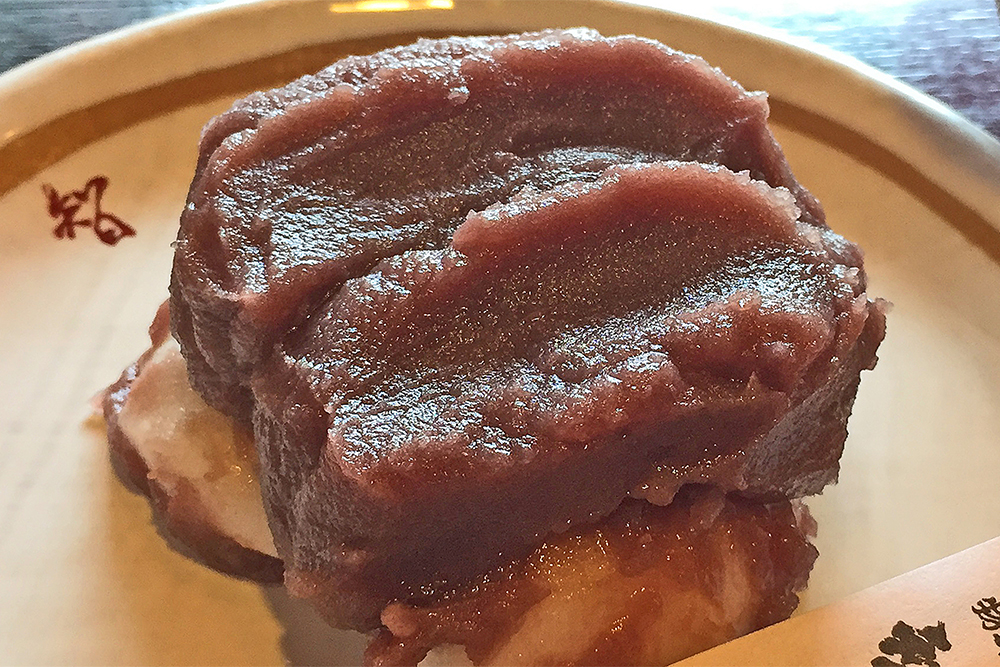
Each shop’s Chie-no-Mochi differs in sweetness and texture.
Which one will be your favorite?
When you visit Chion-ji Temple, be sure to try and compare the unique tastes from all four teahouses!