Chion-ji Temple
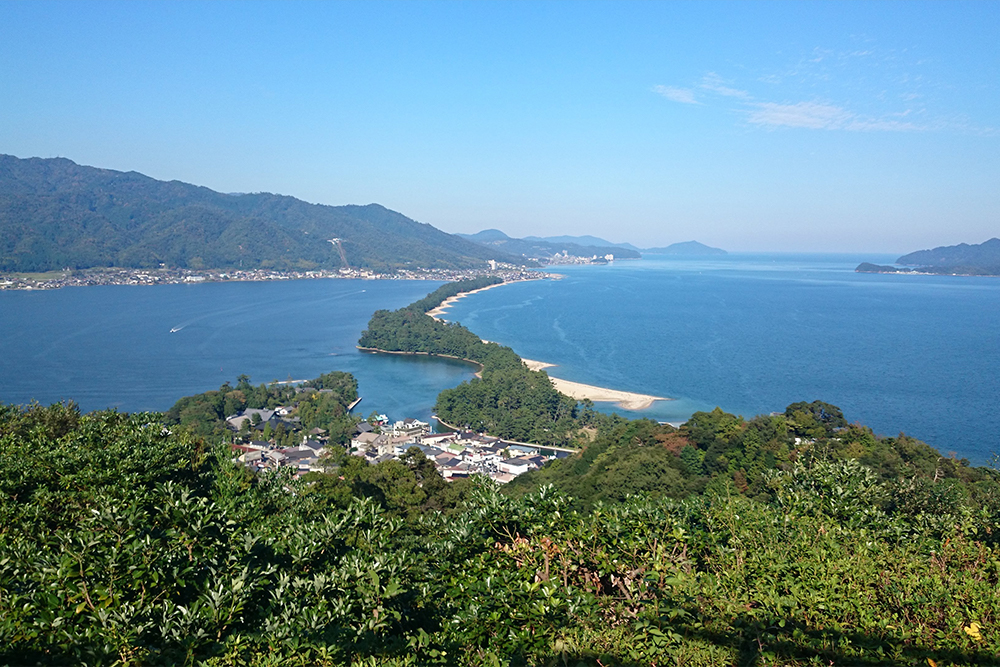
Located about a five-minute walk from Amanohashidate, Chion-ji is one of Japan’s Three Monju Temples, along with Abe Monju-in in Sakurai, Nara and Kameoka Monju in Takahata, Yamagata.
The temple enshrines Monju Bosatsu, known as the Buddha of Wisdom—famous from the proverb “Three heads are better than one.” Visitors from across Japan come here to pray for academic success and passing entrance exams.
According to the temple legend “Kyuseiko Engi,” when the deities Izanagi and Izanami were creating the land of Japan, they invited Monju Bosatsu from China’s Mount Wutai to pacify an evil dragon that was raging in this area, transforming it into a benevolent dragon.
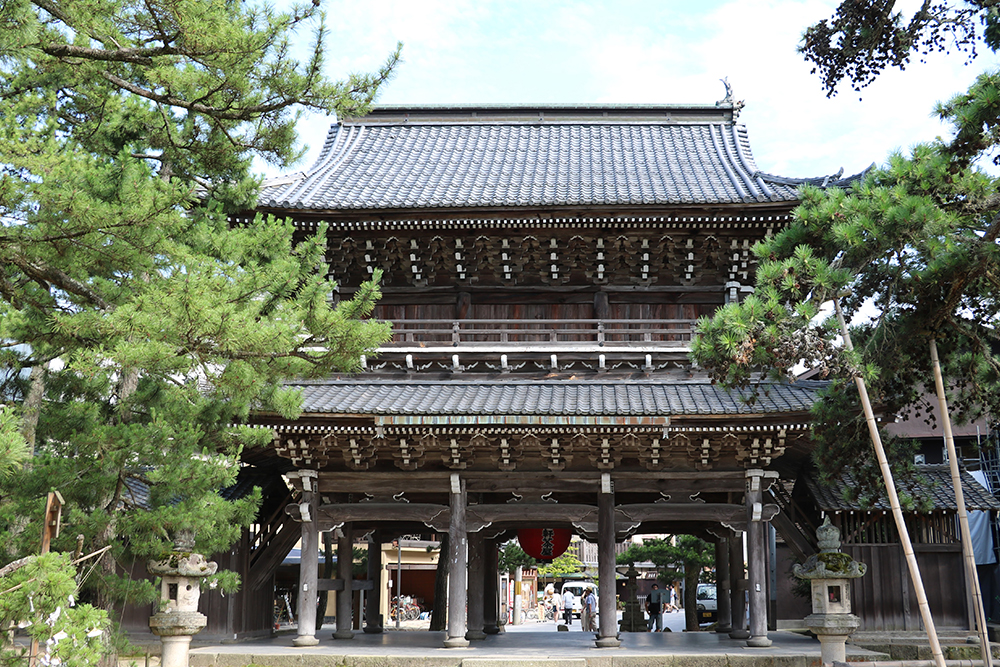
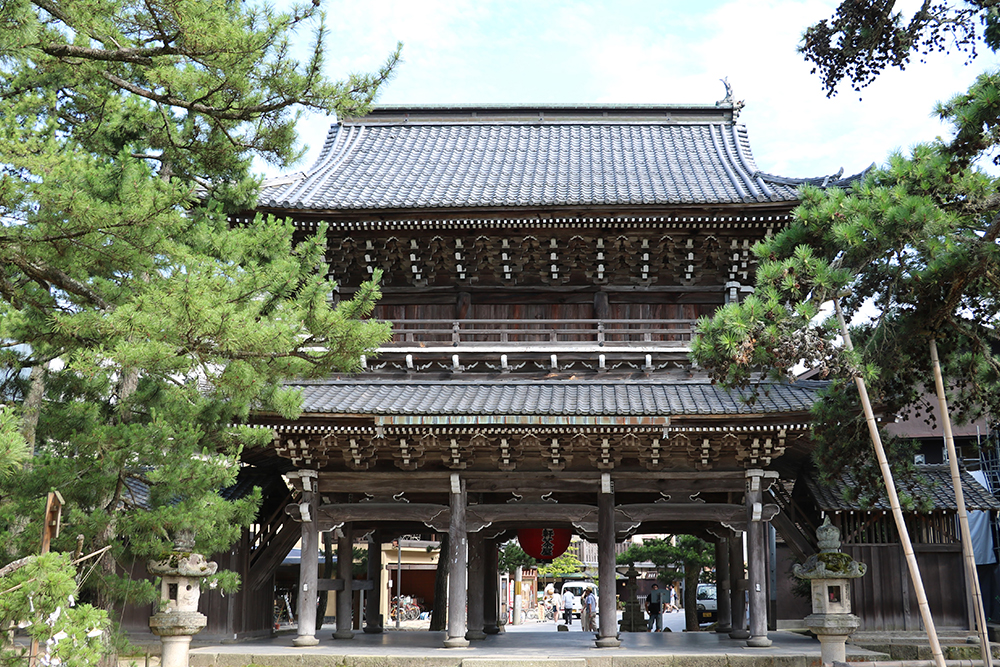
As you walk along Chayadori Street, a grand mountain gate appears before you—the entrance to Chion-ji.
It is said that during reconstruction, Empress Gosakuramachi bestowed gold for its creation, and thus the gate became known as the “Golden Pavilion Gate.” Constructed in a traditional Zen style, it is the largest gate in the Tango region. The project took seven years, and the gate was completed in the fourth year of the Meiwa era.
Remarkably, 8,780 carpenters were involved—a testament to its incredible scale and craftsmanship.
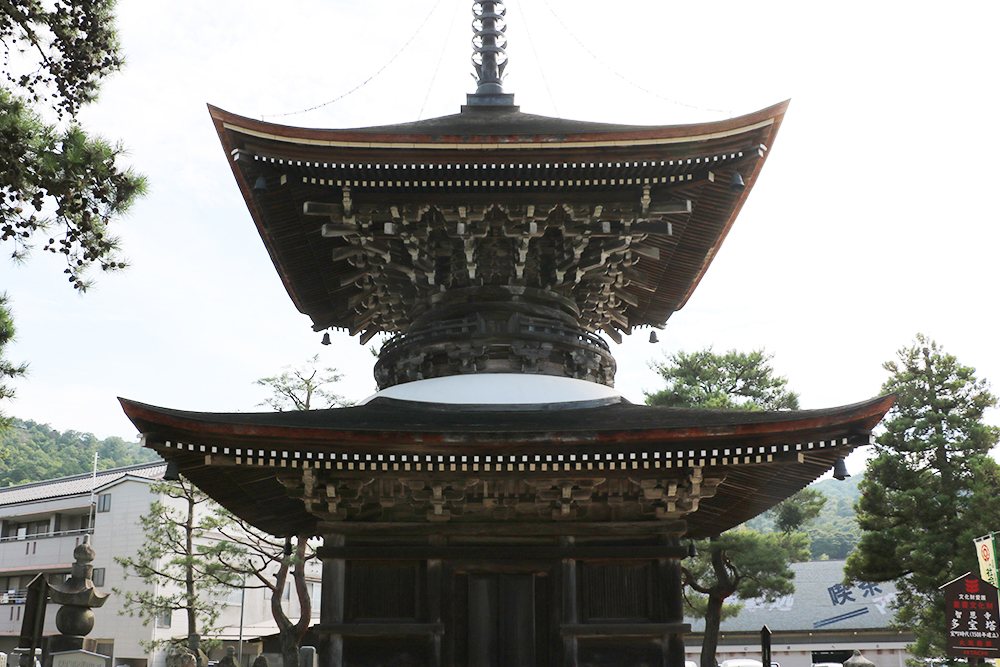
Passing through the gate and entering the temple grounds, the first structure you’ll notice on the left is the Tahoto Pagoda.
It was built by the lord of Fuchu Castle in gratitude for his recovery from illness and dates back to 1500. It is the only surviving structure from the Muromachi period in the Tango region and is designated as an Important Cultural Property.
Facing the pagoda stands three life-size stone Buddhas.
These statues appear in Sesshu’s painting “Amanohashidate View,” and based on the jewels held in the left hand and a staff in the right, they are known to be images of Jizo Bosatsu.
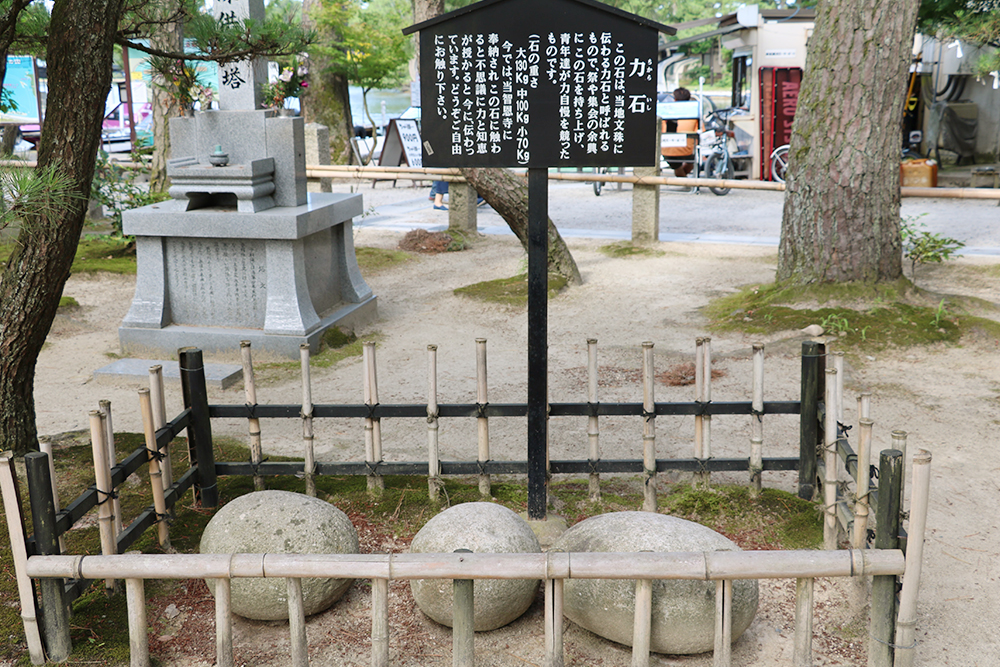
Another highlight is the “Chikara-ishi,” or Power Stones—three stones in large, medium, and small sizes, once used in strength contests during festival entertainment.
The large stone weighs about 130 kg, the medium 100 kg, and the small 70 kg. It is said that touching these stones grants strength and wisdom. Even if you can’t lift them, be sure to touch them before you leave!
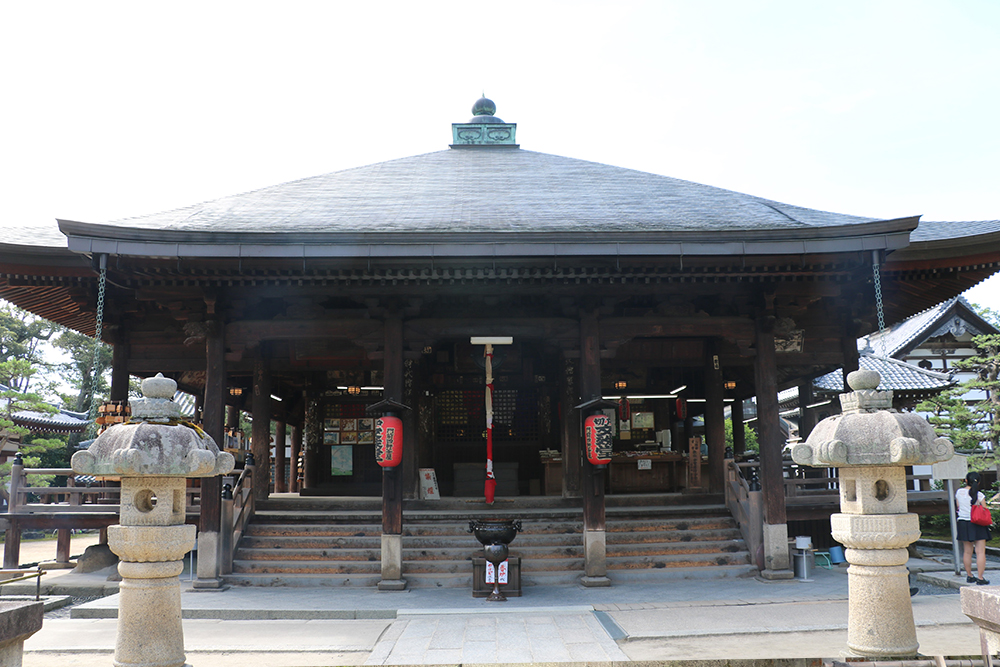
Before visiting the main hall, you will find the “Iron Bath Basin” on the left, used for purifying oneself before worship.
Originally built in the Kamakura period, it was once used as a bath tub by monks in the temple baths.
Once purified, continue onward to the temple’s greatest highlight—the Monju Hall!
Monju Bosatsu, the deity of wisdom, is enshrined in this hall with its copper-plated roof.
However, as the statue is considered a hidden Buddha, it is not on display during ordinary times.
Still, the more forbidden it is, the more curious one becomes!
The statue is revealed to the public only five days a year: the first three days of New Year, January 10th, and July 24th. If you wish to catch a glimpse, plan your visit accordingly.
After visiting the main hall, do not miss the Bell Gate nearby.
Built in 1722 by a wealthy merchant who had lost two children, it is called “Gyounkaku,” named after their Buddhist posthumous names.
The lower structure features turtle-shell-shaped protrusions on both sides, creating a distinctive style known as “Ryugu Gate Form,” evoking the mythical Dragon Palace under the sea—a fitting comparison indeed.
Next, located to the right of the path leading from the main hall to the boat pier, stands the sacred tree “Monju Tree.”
Its name connects directly to Monju Bosatsu, suggesting that those who “adorn their life with wisdom” will be blessed.
Its sap is believed to possess spiritual energy and is used for producing high-quality incense, making this tree truly worthy of the title “sacred.”
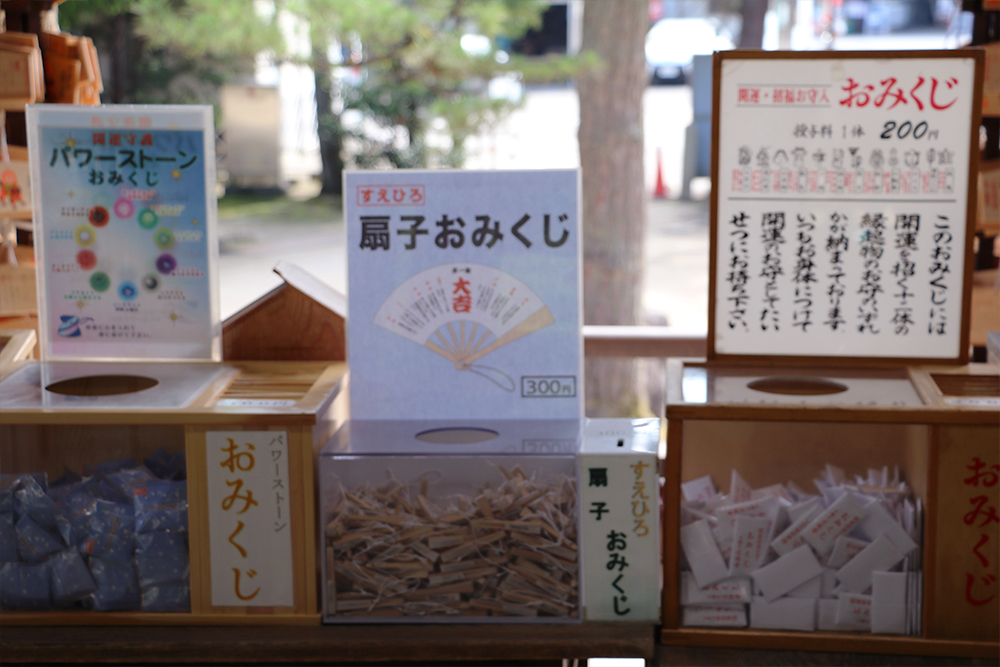
And finally, no temple visit is complete without drawing an omikuji fortune slip.
Among the many kinds available, the one that stands out is the “Suehiro Fan Omikuji.”
The fans tied throughout the grounds look like blooming flowers—this is the Suehiro Fan Omikuji!
When opened, the fan reveals your fortune. Although it may be tempting to take it home as a souvenir, custom dictates that you tie it to one of the pine trees on the grounds.
Why not try your luck and make a fan blossom on the pine trees yourself?
Before you leave the area, make sure to visit the “Ring of Wisdom Lantern,” located near the boat landing on the north side of the temple.
Originally built for the safety of ships, it is said that passing through the ring three times grants the wisdom of Monju Bosatsu.
However, you are not allowed to pass through with your entire body—so how will you do it?
Perhaps, if three people put their heads together, you might discover the answer.
- Contact Information
- 智恩寺
- TEL
- 0772-22-2553
- Address
- 京都府宮津市字文珠466
- Website
- http://www.monjudo-chionji.jp/
- Distance from the Facility
- 車で22分